 Finn Vu
On this page
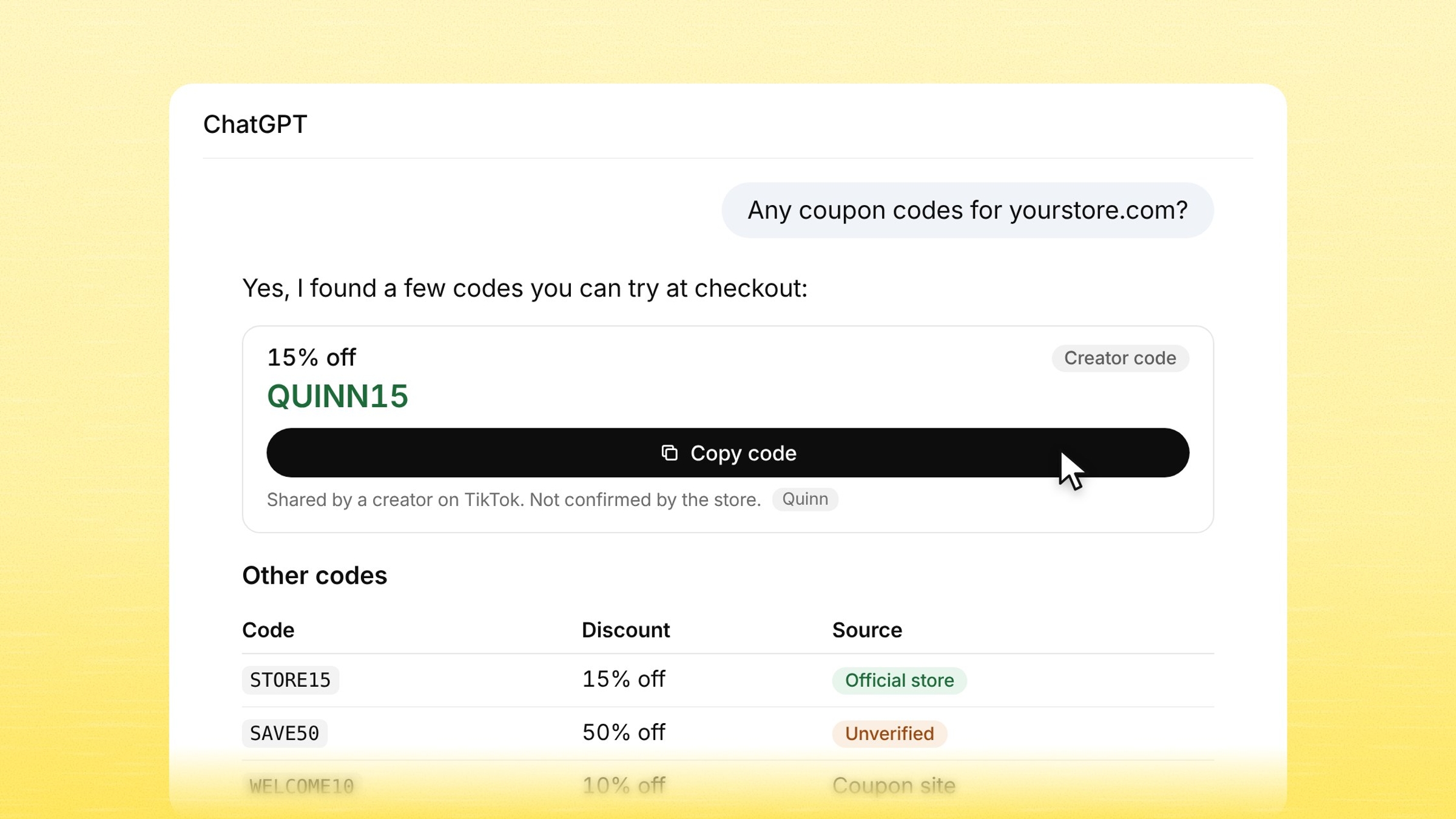
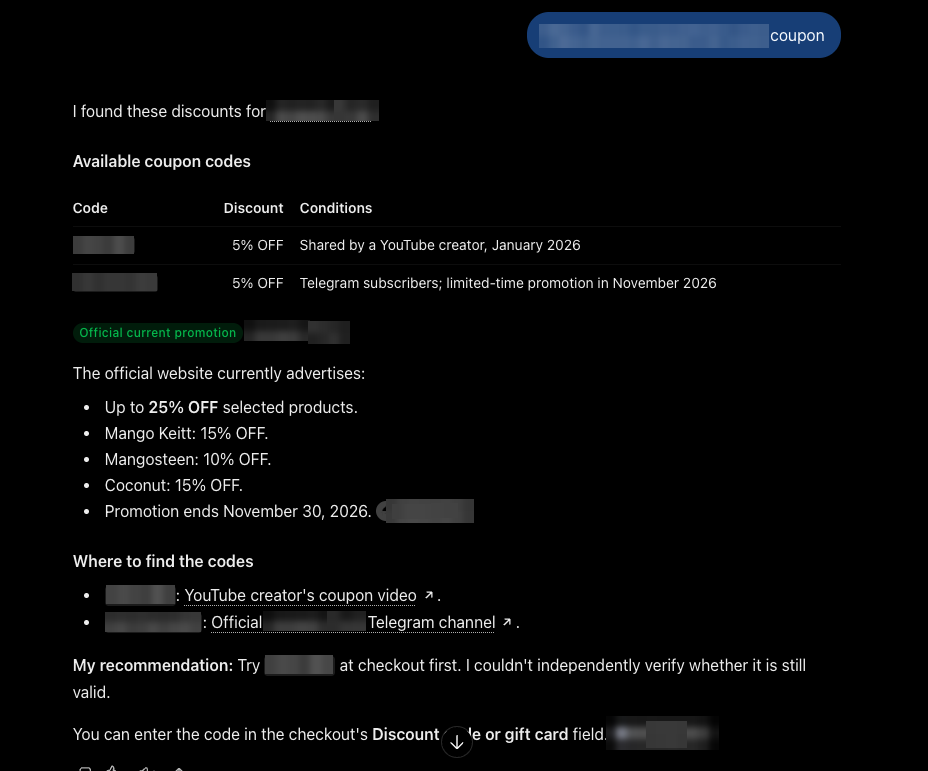
Ask ChatGPT for a store's coupon code and it now answers with a list of codes, sometimes shown as cards with a Copy code button. On November 27, 2026, we asked ChatGPT for coupon codes for 11 online stores, from small Shopify brands to global retailers across the US, UK, Germany and Spain.
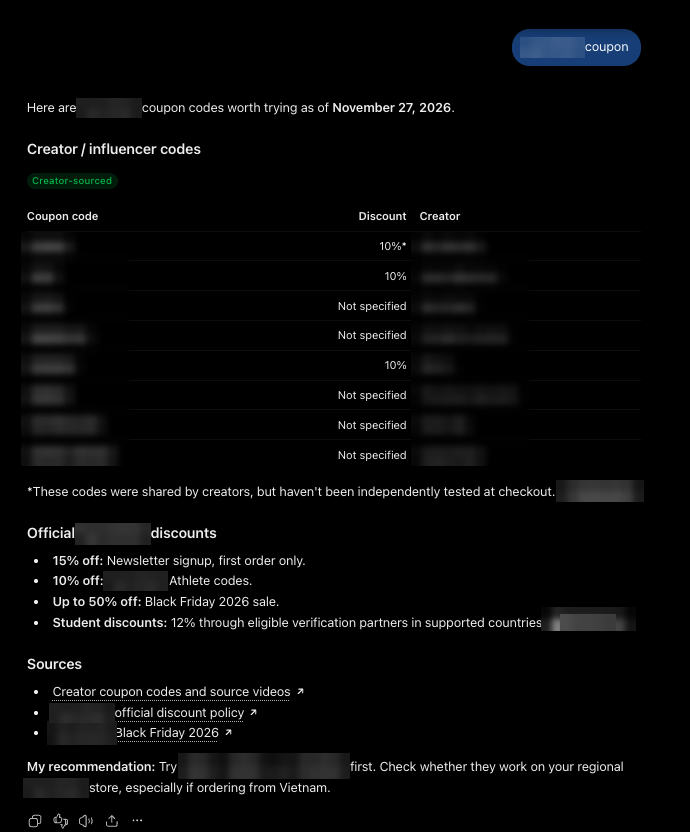
In 10 of the 11 first answers, it listed codes the store hadn't published itself; the 11th showed only the store's own codes until we asked about creators. For six brands it found creators' codes, and in two answers it told us to try a creator's code first.
Others have reported coupon cards in ChatGPT and Google's AI answers since November 19. If one of those codes belongs to your affiliate, you may pay that affiliate a commission on a sale they didn't bring in. Here's what we saw and what you can do about it.
What does ChatGPT show when shoppers ask for a coupon code?
ChatGPT now answers coupon questions with a list of codes, including ones the store never published, and often recommends which one to use.
Four things stood out in our 11 tests:
- Any public code can end up in the answer. ChatGPT found codes in creators' TikTok and YouTube posts, coupon sites, review sites and newsletters, whether or not the store had published them.
- It picks favorites. In 5 of 11 answers, ChatGPT told us to try a code the store hadn't published first. In two, it was a creator's code, even though one of those stores was running its own sale.
- Old codes come back. A creator code shared in January 2026 was still listed in November.
- It labels what it can match. Offers it found on the store's own site got labels like "Official store", often with an end date. When it couldn't match a code to the store, it said so: "Unverified" or "Not verified by [brand]".
The pattern held across countries. We saw creators' codes for German, US and UK brands, and coupon-site codes for Spanish and US brands.
This may be a holiday test: one tracker saw deal cards rise from about 3% to 16% of ChatGPT's Black Friday product answers in four weeks. Deal cards are product cards with a price, a store and sometimes a code, not coupon cards, so that number tracks deals shown in answers, not coupon codes.
Google has been moving the same way: it has been testing pulling promo codes from store websites in a closed beta for free listings and Shopping ads in some countries.
What does this mean for your affiliate program?
When a shopper copies an affiliate's code from an AI answer, coupon tracking credits that affiliate, so you pay the discount and the commission even though the affiliate didn't send the shopper. Coupon tracking means an order counts for whoever owns the code used at checkout.
Example: your affiliate Quinn shares the code QUINN15 in a TikTok caption. ChatGPT finds it and lists it for anyone who asks for your coupon code, sometimes as the first code to try. A shopper who has never seen Quinn's video copies it, and the order is credited to Quinn. This is coupon leakage: a code meant for one audience reaching everyone. A code with no end date can keep showing up for months.
How much this matters depends on the code:
- Creator codes meant to be public. Some brands want every creator's code out there, such as athlete programs where each code gives 10% off. For them, AI is one more place shoppers find the code.
- Codes for one campaign or one audience. Here you pay a discount and a commission on reach you didn't plan.
- Coupon and review-site partners. If the code is assigned to them in your affiliate app, they still get credited. If you credit them by link clicks only, a shopper who copies their code from ChatGPT never clicks their link, so the sale isn't credited to them.
- Codes that don't work. Unverified coupon-site codes may fail at checkout, and if they do, the letdown lands on your store, not on the AI.
To choose between links and codes for each partner, see Affiliate links or coupon codes?
What can you do about it?
Check what AI shows for your brand, publish your own offer with its terms, give creators codes with an end date, and use link-based discounts where codes keep spreading. None of this has to happen this weekend; it's a habit worth building.
- Check what AI shows. Ask ChatGPT "[your store URL] coupon", then "any coupon from creators?" Note which codes appear and where ChatGPT says they came from.
- Publish your offer with its terms. Put your current code on one page of your site with the discount, minimum order, end date, eligible products and whether it combines with other discounts. In our tests, offers ChatGPT found on the store's own site were the ones labeled "Official", and for one brand with a clear promotions page, ChatGPT recommended the store's own code first. That page can then work like a sales page inside the AI answer: shoppers see your real offer and a reason to order, not a coupon site's guess.
- Give creators campaign codes with an end date. In Shopify, set an end date, eligible products and usage limits on each creator code, instead of one code that runs forever. In BixGrow, one affiliate can hold several codes, so you can retire an old code without losing the affiliate.
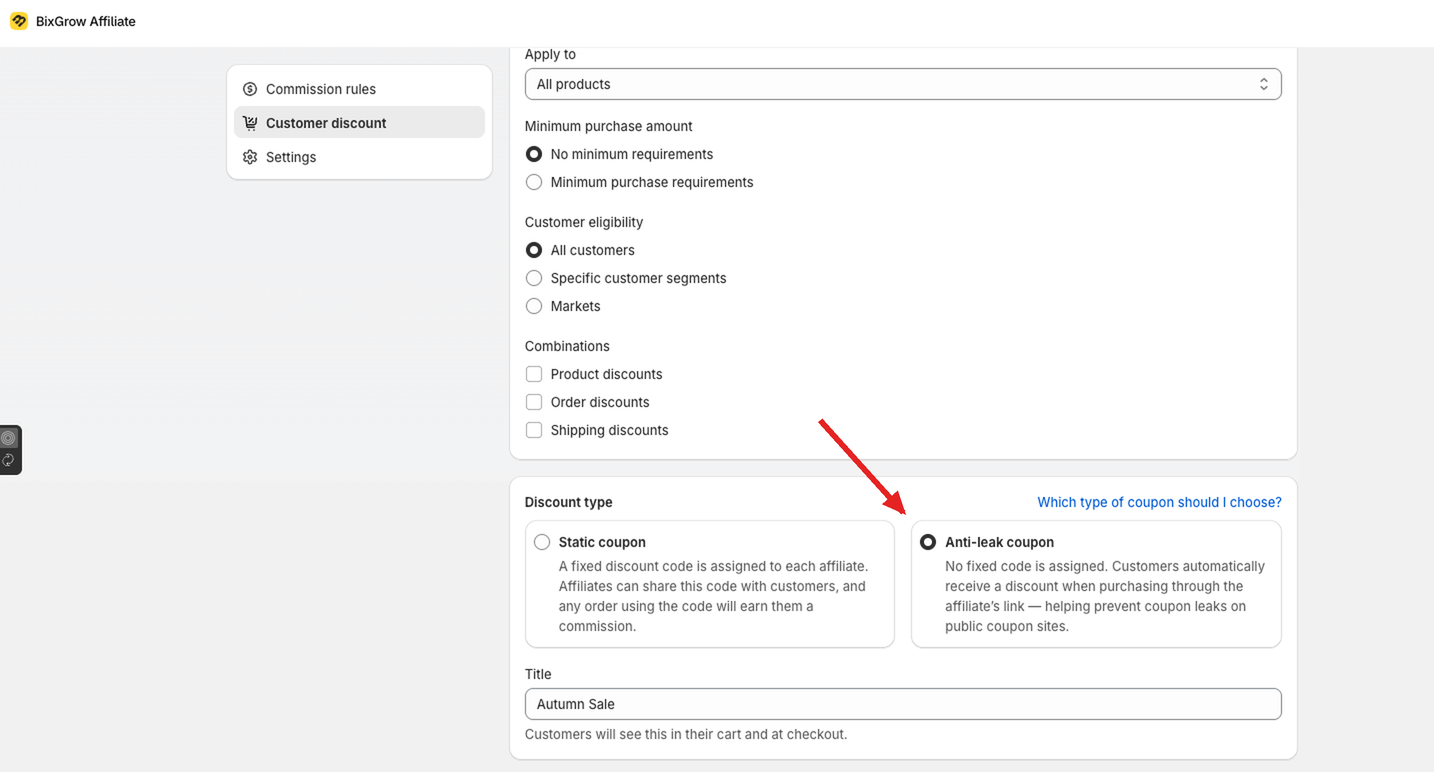
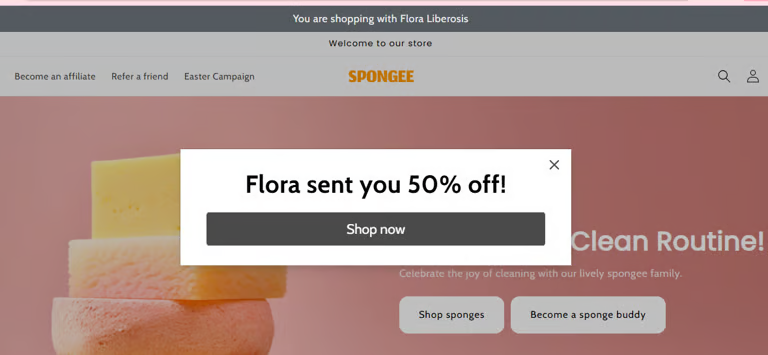
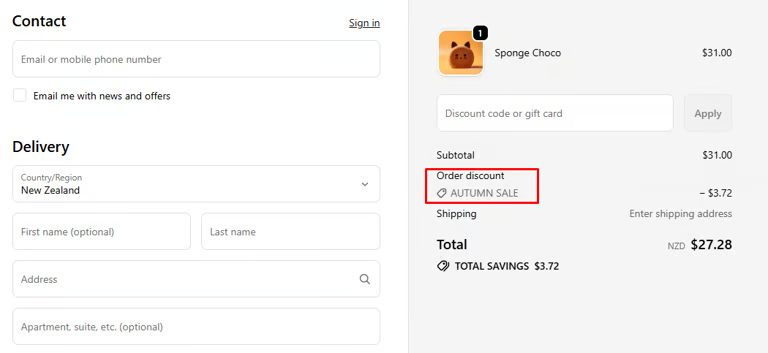
- Use link-based discounts for partners whose codes keep leaking. With BixGrow's anti-leak coupons, the discount applies automatically when a shopper arrives through the affiliate's link, so there's no code to copy. The trade-off: shoppers have to click the link, which doesn't suit creators who read a code aloud in a video or podcast. Anti-leak coupons are set per program. Turning them on hides that program's static codes, so keep creators who share codes in a separate program. Anti-leak coupons are available on the Pro plan.
Want affiliate discounts that can't leak?
BixGrow's anti-leak coupons apply the discount through the affiliate's link, with no code to copy.
Key takeaway
ChatGPT now shows coupon codes from your store, your creators and coupon sites, and sometimes tells shoppers which one to try first. For an affiliate program, that means a creator's code can earn a commission on sales the creator didn't drive. Publish your own offer with clear terms, put end dates on creator codes, and use link-based discounts where codes keep spreading.
How we tested
On November 27, 2026, we typed "[store URL] coupon" or "[brand] coupon" into ChatGPT for 11 stores, from Vietnam, and asked a follow-up for some, such as "any coupon from creators?". Brand names, codes and creator names are hidden. ChatGPT's labels and sources are its own claims; we didn't try the codes at checkout. Results can differ by country, account and day.
Five stores are based in the US, three in Germany, one in Spain, one in the UK, and one sells worldwide.
| Store | Based in | What ChatGPT listed | Where it said the codes came from | Told us to try first |
|---|---|---|---|---|
| Beauty brand (large) | US | 5 codes and a gift with purchase | Coupon sites; media deal pages | Two unverified codes |
| Apparel brand (large) | US | 2 codes and the store's sales | A coupon site; an email archive; the store's site | — |
| Footwear brand (large) | US | 5 codes and the store's sale; 5 creators' codes when asked | Coupon sites; creators' posts | A third-party code |
| Wallet brand | US | 2 store codes; 6 creators' codes when asked | First answer: the store's pages only. When asked: a creator-code site | The store's own code |
| Health wearables brand | US | 3 codes and the store's sale | A promo page; two review sites | — |
| Fitness apparel brand (large) | UK | 8 creators' codes and the store's discounts | A creator-code site; the store's discount policy | Three creators' codes |
| Shapewear brand | Germany | 4 codes | The store's site and ads; creators' TikTok posts | — |
| Health and wellness brand | Germany | 2 coupon cards and a newsletter offer | The store's product page; a creator | — |
| Fruit delivery store | Germany | 2 codes and the store's sale | A YouTube creator (January 2026); the brand's Telegram channel | The creator's code |
| Home goods brand | Spain | 4 codes | A coupon site | None ("treat as unverified") |
| Digital game key store | Sells worldwide | 7 codes | The store's FAQ (1 code); coupon sites; a newsletter | The biggest coupon-site code |
— = no recommendation in the part of the answer we captured.